Research
Google Is Now Paying Some Publishers When Their Content Feeds an AI Answer
A handful of publishers now see a monthly payout number inside Search Console for content that shaped an AI answer. Nobody outside Google can see how that number gets calculated, and some publishers who joined are calling the early payouts peanuts.

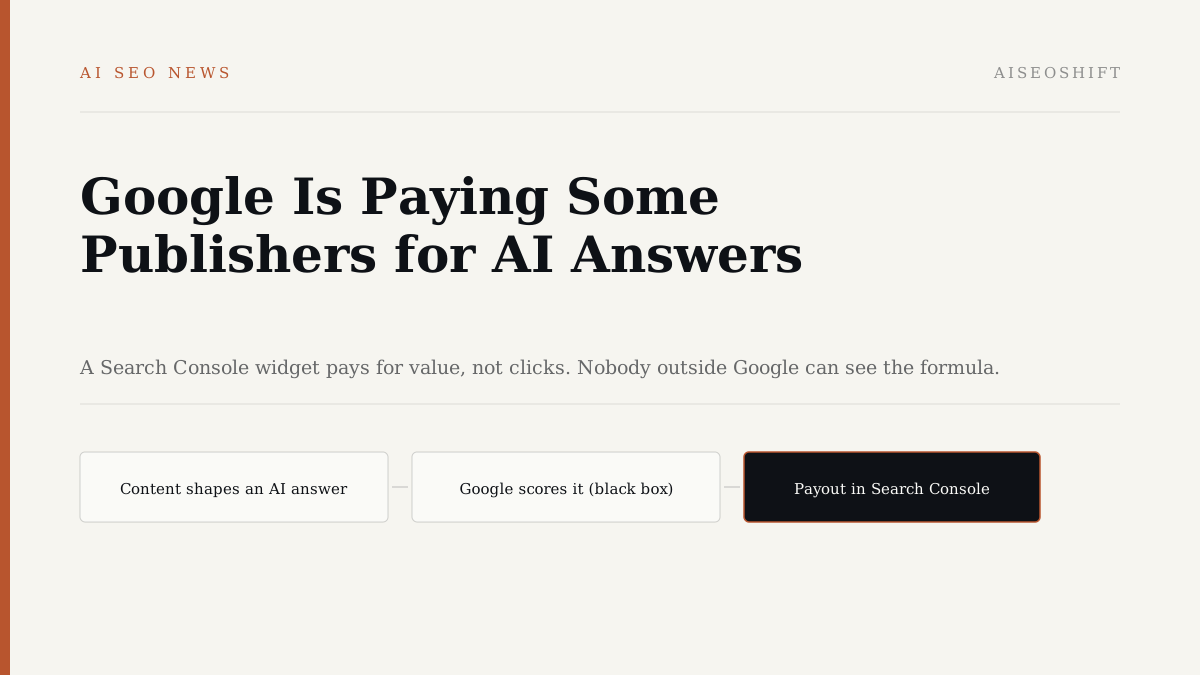
Open Search Console if you are one of a small number of publishers Google has quietly reached out to, and there is a new panel waiting: a monthly number, labeled as AI earnings, with no explanation of how it was calculated.
That panel is the visible part of what Google calls the AI Contribution Pilot, first reported by Digiday and covered since by Search Engine Roundtable and Search Engine Journal. It is the first time Google has tested paying publishers directly, in dollars, tied specifically to AI-generated answers rather than to search traffic, ads, or a licensing deal negotiated one publisher at a time.
TL;DR
Google is running a limited pilot that pays selected publishers when their content substantially contributes to answers generated by the Gemini app, AI Overviews, or AI Mode. Participants accept program terms in Search Console and get an earnings widget showing monthly payout figures and payment history, with funds sent to a linked bank account. Google says compensation is based on “value rather than raw usage”: simply being cited or linked is not enough, the content has to meaningfully shape what the AI actually generated. Google has not disclosed how that value is scored. At least dozens of publishers have been approached, skewing toward small and mid-sized outlets rather than major publishers, and the program has expanded beyond news sites. Publisher reaction is mixed: some call the precedent of direct AI payment meaningful and describe Google’s team as collaborative, with weekly calls. Others describe the actual payouts as “peanuts” next to ad revenue, call the whole system “quite black box,” and worry that joining could weaken their hand in separate licensing negotiations, since Google could point to the pilot as evidence it already pays for content.
How the pilot actually works
Publishers who are invited accept a set of program terms inside Search Console. From that point, a new panel tracks earnings tied specifically to AI contribution, separate from the generative AI performance reports Search Console already offers, which show impression-level data on how often a site’s content surfaces in AI Overviews and AI Mode without any payment attached.
The mechanics, as described by publishers who’ve joined:
- Enrollment is by invitation, not self-service. Google has approached participants directly rather than opening a public application process.
- The widget shows a monthly figure plus historical earnings, and a status indicator for whether funds have actually been transferred to a bank account, since the transferred amount can differ from the estimated figure once taxes or regional payment thresholds are applied.
- No breakdown accompanies the number. Publishers can see what they were paid. They cannot see the usage signals, page-level attribution, or weighting that produced it.
- Opt-out is available at any time, through the same Search Console settings where the program terms were originally accepted.
Google’s own framing, per a June blog post the company pointed reporters back to, describes this as an “early-stage learning pilot to test how best to reward high-quality content” from sites whose material helps keep AI responses “fresh and accurate.” That is a narrower claim than “we now pay for AI training” or “we now pay for citations.” It’s closer to a tip, unattached to any per-article rate card and revisable at Google’s discretion, structured to look and feel like a normal Search Console feature rather than a negotiated contract.
The value-not-usage distinction, and why publishers find it hard to trust
The most consequential design decision in the pilot is what it explicitly excludes: being cited. A publisher can appear as a linked source in an AI Overview or AI Mode answer and earn nothing from that alone, if Google’s model judges the citation wasn’t load-bearing to the generated text.
That distinction matters because it’s the opposite of how search advertising and referral traffic have always worked. A blue link earns you a click whether or not you wrote the best sentence on the page. An AI Contribution Pilot payout, by design, only fires when Google’s own internal judgment concludes your specific words did real work inside the answer. Publishers have no way to audit that judgment. One executive with knowledge of the program put it plainly to Digiday: “it’s quite black box.” Another was more direct about the transparency gap: “Do I wish they were more transparent? Definitely.”
The dollar amounts compound the skepticism. Multiple participants describe early payouts as “peanuts” relative to what the same content used to generate in display advertising, and some report numbers too small to clear standard payment thresholds at all. None of that is surprising for a pilot Google itself is calling early-stage. It does mean the headline framing, that Google is now paying publishers for AI, is doing more work than the actual dollar figures currently support.
There’s a second, quieter concern circulating among the publishers who’ve joined: participation itself could become evidence used against them later. If a publisher is separately negotiating a licensing deal with Google over AI training or search-index access, Google having already established a “we pay for AI contribution” precedent, however small the number, gives it a reference point to anchor future negotiations lower. A program framed as goodwill can double as a bargaining chip against the party it’s supposed to be helping.
Why publishers are joining anyway
Despite the skepticism, the reported sentiment among participants leans toward cautious support rather than rejection. Several described the actual working relationship with Google’s team as “extremely collaborative,” including weekly check-in calls, which is a notably higher-touch arrangement than publishers typically get from a platform relationship with Google.
The bigger draw seems to be precedent, not payout size. As one anonymous publisher told Digiday: “I’m hopeful that the fact that they’re setting a precedent for exploring paying publishers directly for content through this is meaningful.” For publishers watching referral traffic erode as AI Overviews and AI Mode answer more queries directly on the results page, a small, direct, trackable payment beats waiting indefinitely for click volume that may never fully return. Several participants reportedly framed the pilot as functionally similar to what Search Console already does for organic visibility: a dashboard that at least gives them a number to watch, on a new kind of traffic, even if the underlying math stays opaque for now.
Why this matters beyond the participants
The pilot is small. Dollars per publisher are reportedly modest. But the structural move is bigger than the current numbers suggest, for two reasons.
First, Google building any mechanism at all to pay for “contribution” inside a generated answer, rather than treating a webpage purely as free training and retrieval material, is new. Regardless of how the specific payout formula shakes out, the pilot establishes that such a mechanism can exist inside Search Console’s existing publisher-facing tooling, which is the same channel Google already uses to communicate indexing status, manual actions, and structured data issues. That’s a meaningful precedent for the rest of the AI-answer ecosystem, not just for Google.
Second, it puts a spotlight on a measurement problem the whole industry still hasn’t solved: how do you score a source’s actual contribution to a generated answer, as opposed to its mere presence in the retrieval set. Information Gain Optimization describes the content-side version of this same question, whether a page adds anything a system hasn’t already seen. The AI Contribution Pilot is Google building the payment-side version of the identical question, and admitting, by keeping the scoring private, that it doesn’t yet have an answer it’s willing to publish.
Whether the pilot expands past dozens of invited publishers, or whether it quietly narrows into the standard, unpublicized way large platforms test compensation ideas before dropping them, is the thing worth watching over the next few quarters. For now, treat it as a signal, not a business model. The number in the widget is real. What produced it isn’t yet something anyone outside Google can check.
Primary sources and further reading
- Google rolls out pay-per-value AI licensing program to publishers - Digiday’s original reporting, including the “black box” and “peanuts” publisher quotes
- Google Search Console Testing Paying Publishers For Use Of Content In AI - Search Engine Roundtable’s coverage
- Google Tests Paying Publishers For AI Answers Via Search Console - Search Engine Journal’s summary of the mechanics
- Google tests paying publishers for using its content in AI Mode, AI Overviews and Gemini - Search Engine Land’s coverage